Case Study
NeuroBoost UX
Uncovering what drives user decisions when surveys and click data can't

Two unrelated projects, the same blind spot: teams making product and marketing decisions based on what users said they wanted, while the numbers kept disagreeing. A digital product team's adoption metrics didn't match glowing survey feedback. A brand couldn't settle on a newsletter layout from stakeholder opinion alone. The brief in both cases: measure what users can't self-report.
The problem
Two projects, same blind spot. In both cases, teams were making product and marketing decisions based on what users said they wanted, and the numbers kept disagreeing.
Project 1: a digital product team struggling with engagement. Users completed surveys, gave feedback, clicked through prototypes. Everything looked fine on paper. But adoption metrics told a different story. The team suspected the disconnect was somewhere between what users consciously reported and what actually drove their behaviour, but they had no way to see it.
Project 2: a brand preparing a newsletter relaunch. Three layout variants looked equally strong in internal review. Stakeholders had opinions. Nobody had evidence.
What I did
Online neuromarketing studies (Project 1)
I designed and ran online studies that bypassed self-reported preference entirely. Instead of asking users what they wanted, I measured what was happening underneath: implicit attention patterns, reaction-time-based association tasks, and structured decision games that surface subconscious drivers (the needs and motivations users act on but can't articulate in a survey).
The raw output wasn't a single "winner." It was clusters. Users grouped into distinct segments based on which subconscious needs were actually steering their decisions. Each cluster responded to different triggers, different framings, different value propositions.
From those clusters, a set of concrete adaptation recommendations was developed: how to adjust the product's messaging, onboarding flow, and feature hierarchy to speak to each group's actual motivators rather than their stated ones.
A/B/C eye-tracking study (Project 2)
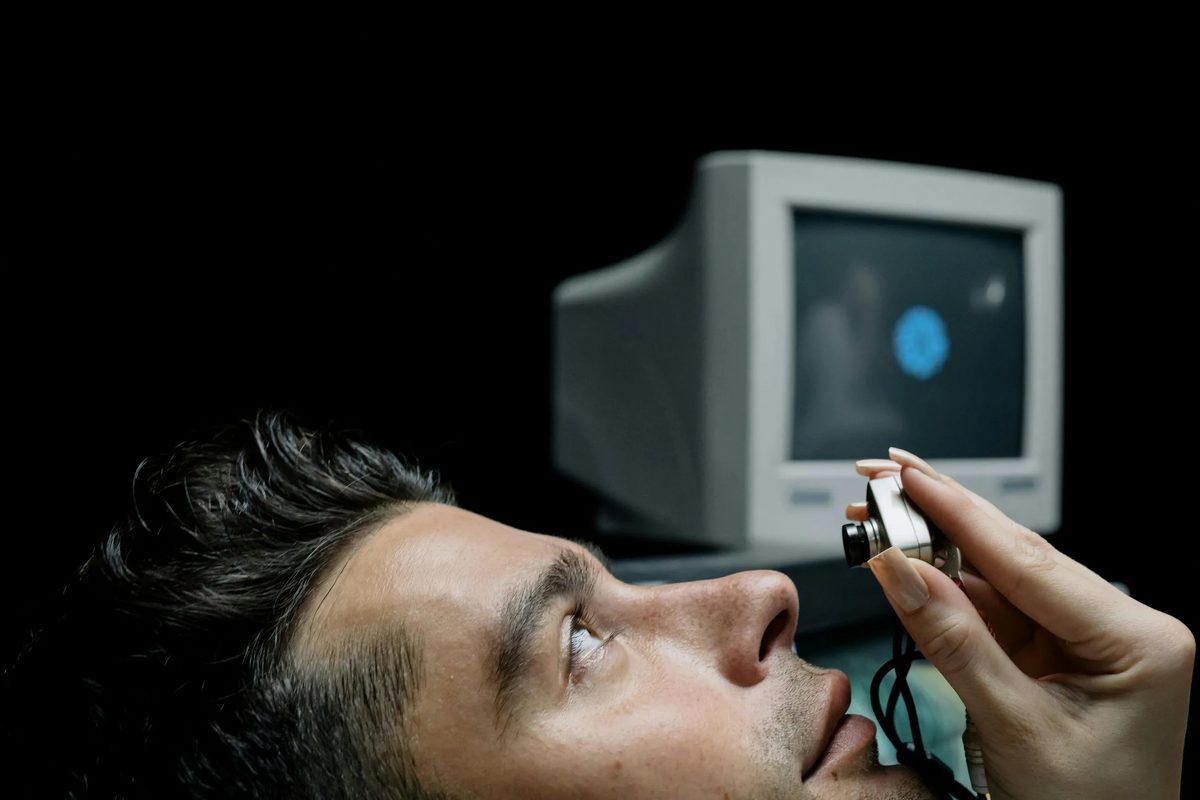
For the client, I built three newsletter variants in HTML/CSS and ran a controlled eye-tracking study across all three. Each participant worked through a realistic reading scenario while gaze data captured fixation duration, scan paths, and which content blocks actually held attention versus which ones users scrolled past.
The study didn't just pick a winner. It showed why one variant outperformed. Heatmaps revealed that the best-converting layout wasn't the one with the strongest hero image or the boldest CTA. It was the one where the visual hierarchy guided the eye through a specific content sequence: context first, then proof, then action. The other two variants scattered attention across competing elements and lost readers before they reached the conversion point.
What shipped
Project 1: A segmentation framework mapping user clusters to their subconscious need profiles, paired with prioritised design and copy recommendations for each segment. The product team stopped guessing which value proposition to lead with and started matching messaging to the actual drivers behind user decisions.
Project 2: A clear recommendation backed by physiological data, not stakeholder preference. The winning newsletter variant, annotated with gaze-pattern analysis showing exactly which layout decisions created the attention flow that drove conversion. The two losing variants got the same treatment: specific, visual evidence of where and why they failed.
The takeaway
Standard testing captures what people are willing and able to tell you. Neuromarketing methods capture what they can't. In both projects, the gap between those two was exactly where the problem lived, and exactly where the solution came from.